

Imagine the start of 2020, How have you imagined your brand will do this year? Now what you feel?

Imagine the start of 2020, How have you imagined your brand will do this year? Now what do you feel?
Many questions have puzzled entrepreneurs and idea gurus in 2020 after the Covid-19 pandemic. Many crucial parts of brand communication are required to be maintained digitally. Companies that failed to find their mark digitally, cease to exist or fight constantly not to end up there. While many brands are struggling to find their positioning in the minds of customers, some unimaginably traditional brands have changed their way with some simple tricks. While many companies infamously lay off employees to reduce their costs, others are using the existing workforce to transform business activities. Babooi has discovered a pattern of success and failure over the course of a pandemic that became instrumental to brands around the world.
1. Switch to Digital
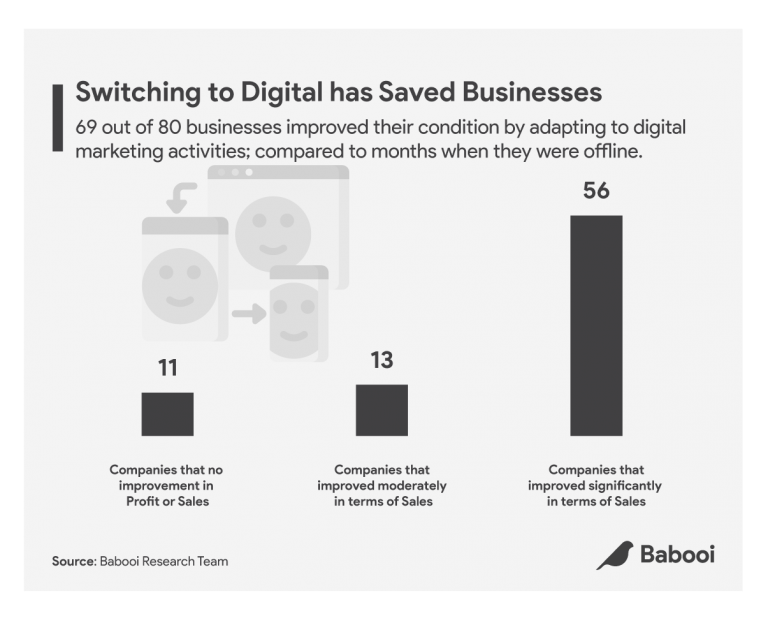
After the government imposed lockdown measures nationwide, companies of all industries faced a sudden vertical fall in their sales. But with time, the ease of lockdown made the businesses more options to change their reality to a certain extent. Small and medium enterprises in Bangladesh which are traditional in nature, tend to focus on their personal network, and offline promotional activities as their means to sustain sales and communication. But as people are staying home and still are unwilling to buy products through physical means, these businesses could hardly communicate in their preferred form of marketing activities. That is why many companies tried to constrict branding during pandemic. The benefits are two folded. As people are spending more time in their homes, they are spending more time online. On the other side, companies that are initiating brand communication online and more likely to be seen organically to a large audience which was unthinkable before the pandemic. We have observed 80 businesses from different industries, and companies that are shifting their brand communication in the digital sphere have found an increase in sales either moderate (5% to 15% increase) or significant (above 15%).
2. Strategic Alliance
The current pandemic has shown that traditional companies need to shift their business process that compliments social distancing measures of customers. But adapting to these new business processes may require new infrastructure, skill set, and experience, which many companies certainly lack. Adding that infrastructure within such a small scale of time can toll heavily on resources. For big companies with a significantly high resource capacity, installing their own facilities may well be possible and feasible. But for the companies that are low in the market or don’t enjoy such feasibility or flexibility, having their own facilities is not an option to conduct branding during a pandemic. Babooi has observed many companies that found their way to success, and a substantial portion of observed businesses joined in a strategic alliance to ensure a seamless business process. The following type of shift in business process is witnessed to be a key contributor in ensuring the right flow of the business process:
- Home Delivery Many customers are uncomfortable about purchasing their desired products. As the pandemic becomes a reality, online purchase with home delivery becomes more prominent in Dhaka, Chittagong, and other major cities in Bangladesh. Currently, many companies are delivering products from other companies in major cities.
- Social Media Marketing Many companies that historically focused on offline promotion, now are under the immense pressure of adapting to online marketing, especially in platforms where customers are spending their time. But as a large number of businesses are constantly trying to get their space in customers’ newsfeeds, it is important that the content of brand communication is attractive and convincing. Many creative firms like Babooi were best suited to avoid mistakes in online brand promotion. Companies that partnered with creative agencies are better prepared and armored to tackle competition in social media.
3. Risk Mitigation
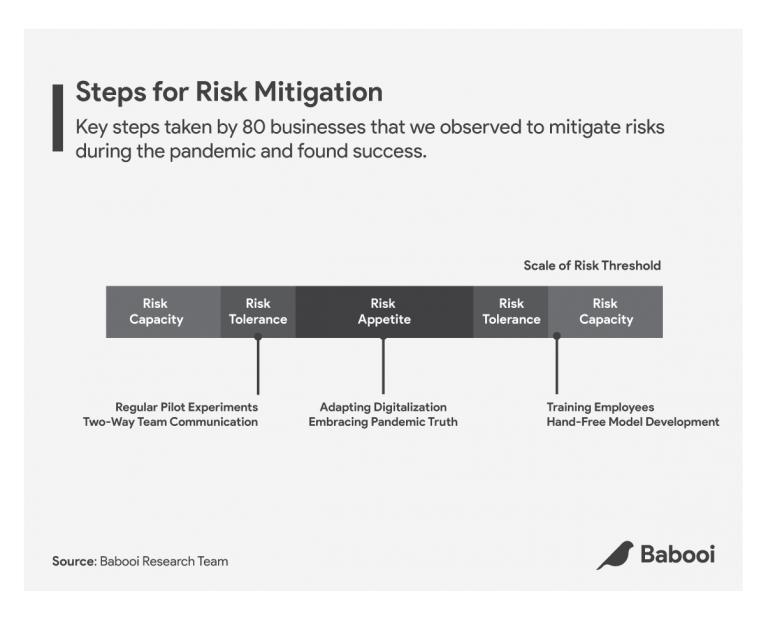
Due to the pandemic, both the perception of customers as well as the reality of the industry has changed drastically. That is why businesses can not blindly rely on their judgment based on the situation before the pandemic. There is so much to learn about what changes are needed. Many successful businesses that we observed adopted the positivist approach in their philosophy of understanding business reality and branding during pandemic. That means they view reality in a neutral position before drawing any conclusion. By understanding what other players in the market are going and experimenting through successful steps, businesses become less prone to extreme risks.
Collaboration
There is a standard norm in conventional businesses that the core insights and decision-making process that bound to employers or people who belong to a managerial position. This has limited the number of ideas that a business can have, but also reduce the evaluation of options. The core rationale behind Bangladeshi conventional businesses to restrict the involvement of general employees in decision-making was a lack of experience and insights. But this has changed due to the pandemic. As a conventional solution has become less reliable, even conventional businesses explore ideas that were considered taboo. To have more ideas to solve such an unorthodox situation, businesses are encouraging the opinion of employees. Adding perspectives into workflow has made it possible for many businesses to try branding during pandemic that were not common.